

The story of Immaculate Heart of Mary Parish (IHMP) begins with growth — the growth of faith communities in post-war Quezon City.
In 1964, the Parish of the Sacred Heart of Jesus in Kamuning was divided due to the rapid increase of Catholic families in the area. The southern sector remained with Sacred Heart Parish, while the northern communities would eventually form a new parish entrusted to the Missionary Sons of the Immaculate Heart of Mary (CMF) — more widely known as the Claretian Missionaries.
The Claretians, founded by St. Anthony Mary Claret in Vic, Spain on July 16, 1849, arrived in the Philippines on December 26, 1946, bringing with them a missionary zeal centered on evangelization, education, and devotion to the Heart of Mary.
In 1967, the Claretians established Claret School of Quezon City in UP Village. While plans for a parish church were still underway, the school auditorium was transformed into a chapel where daily Masses were celebrated. It became the spiritual home of the growing Catholic community.
On September 7, 1969, even without a permanent church building, the Immaculate Heart of Mary Parish was officially inaugurated as a parish of the Archdiocese of Manila.
IHMP’s church would soon become one of the most architecturally significant churches in the Philippines.
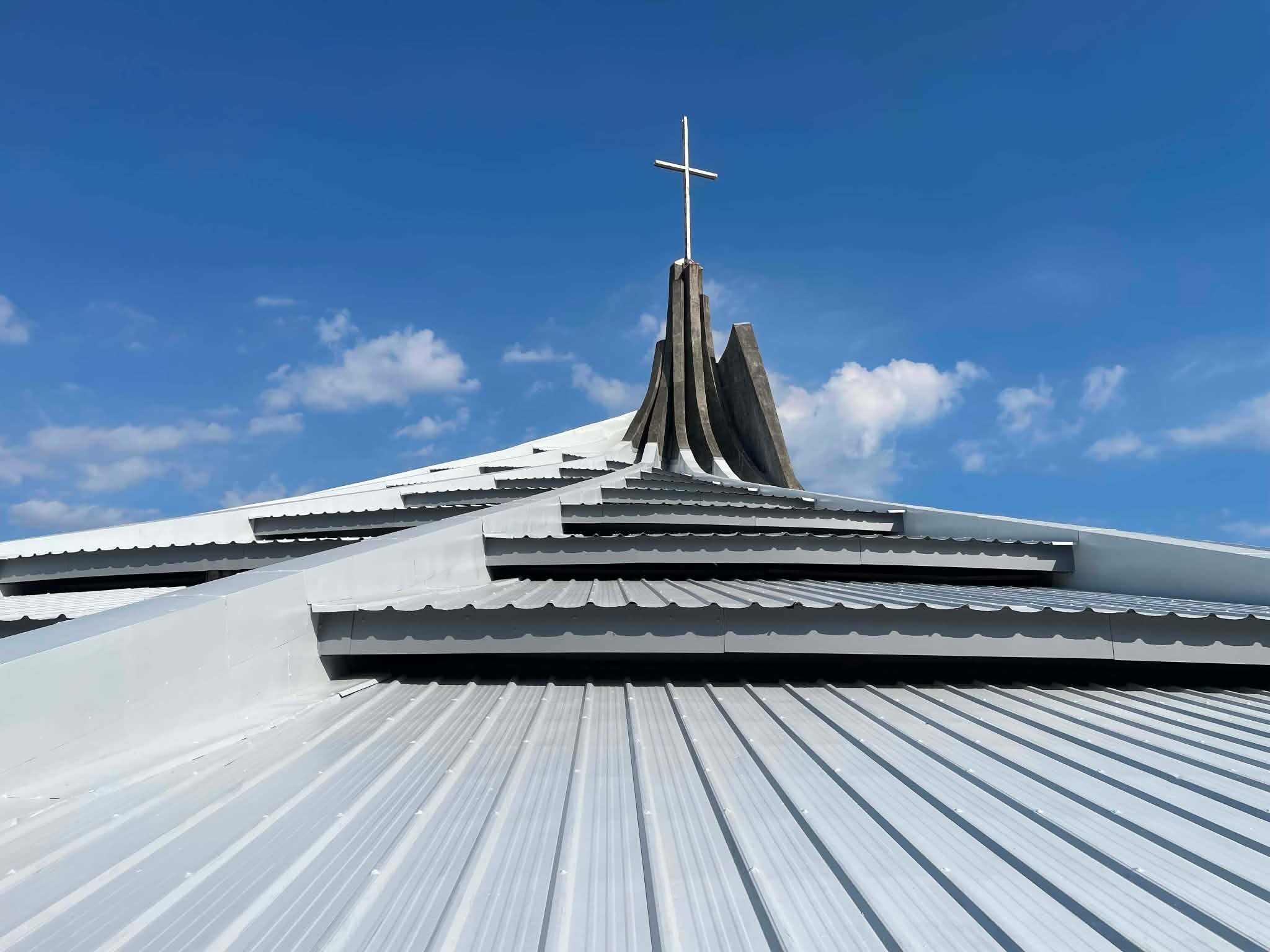
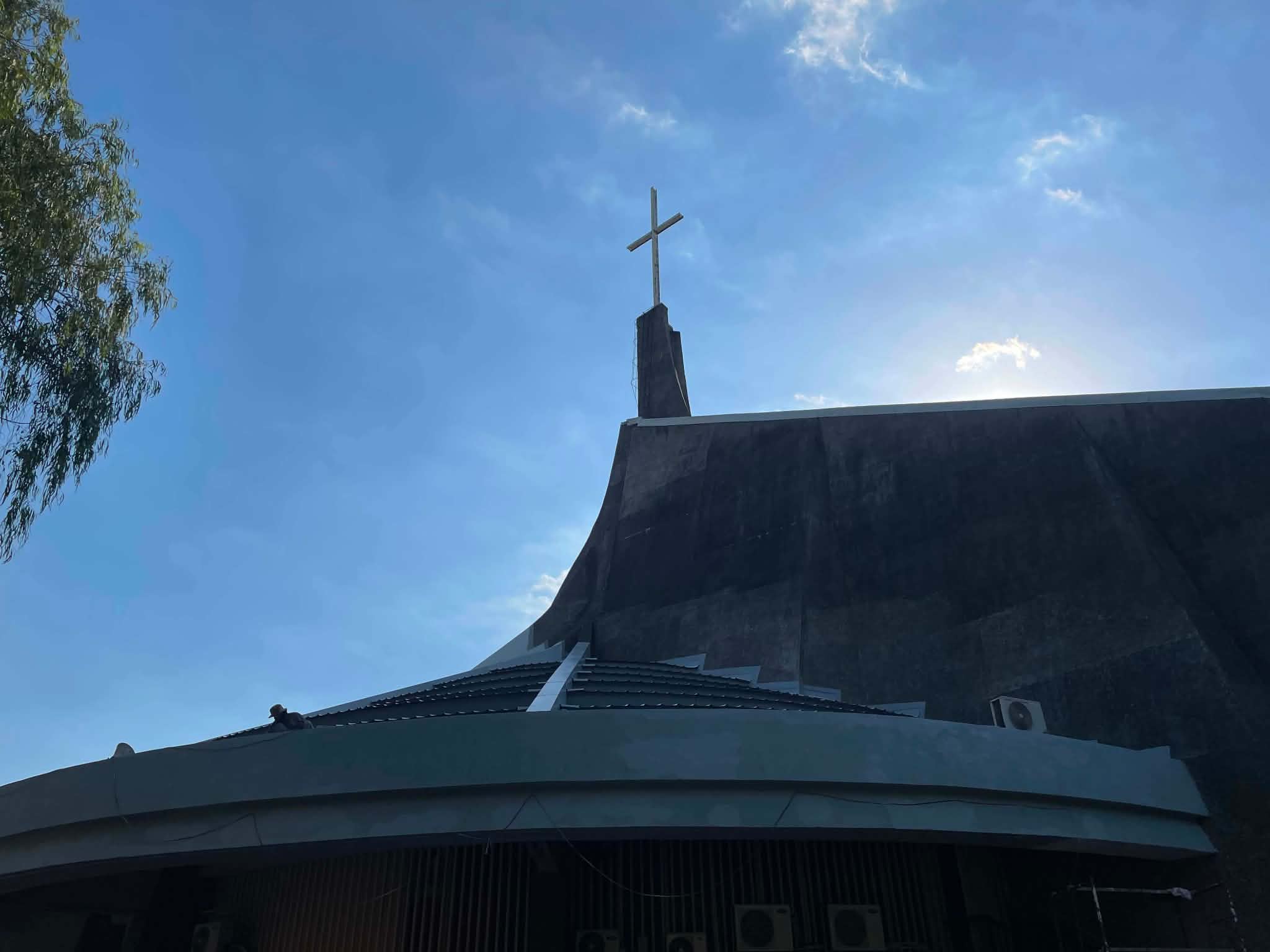
The parish church was conceptualized in 1969 by Leandro V. Locsin, later declared National Artist for Architecture. True to Locsin’s genius, the design blended modernism with deeply Filipino imagery.
The structure rises about four meters above ground, with the space beneath used for parish offices and function rooms. The church’s open design, supported by geometric metal columns and anchored by a great central wall bearing a monumental cross and the Risen Christ, creates a sense of both strength and lightness — a sacred space that feels sheltering yet open to heaven.
The cornerstone was laid on May 3, 1970.
The first Mass inside the unfinished church was celebrated in May 1972.
The church was finally inaugurated on May 27, 1977.
The sacred artworks within the church further enrich its spiritual identity. The images of the Immaculate Heart of Mary in Filipiniana attire, the Risen Lord, and the Tabernacle were designed by internationally known Spanish Claretian sculptor Fr. Segundo Gutierrez, CMF.
In September 1981, Jaime Cardinal Sin, Archbishop of Manila, blessed and unveiled the 14 Stations of the Cross sculpted by Napoleon Abueva, later honored as National Artist for Sculpture.
These large sculptural stations encircle the church, depicting Christ’s Passion from condemnation to burial. Abueva’s artistic vision invites deep reflection: most stations are portrayed from the human perspective, while two are seen from above — suggesting God the Father’s loving gaze upon His Son’s sacrifice.
In 2019, the National Commission for Culture and the Arts (NCCA) declared IHMP an Important Cultural Property. This recognition affirms that the parish is not only a center of worship but also a vital contributor to Filipino cultural heritage.
The citation highlights IHMP’s connection to two National Artists:
The church stands as a rare example of a sacred structure that is both boldly modern and deeply Filipino — where concrete, geometry, light, wood, and symbolic form come together in harmony.
Now part of the Diocese of Cubao, IHMP is located along Mahinhin corner Mayumi Streets in UP Village, Quezon City, quietly nestled between residential communities. Though not situated along a major highway, the parish has become a spiritual haven, a pilgrimage site, and even a cultural destination within the Maginhawa arts and food district.
More importantly, IHMP remains what it has always been: a home of faith, a center of Claretian missionary spirit, and a community devoted to the Immaculate Heart of Mary.
Under the care of the Claretian Missionaries, the parish continues its mission of worship, formation, and service — forming hearts after the heart of Mary, so they may beat with the heart of Christ.